One tomato leaf, start to finish
An example run. The questions and sources are SPROUT’s real ones.
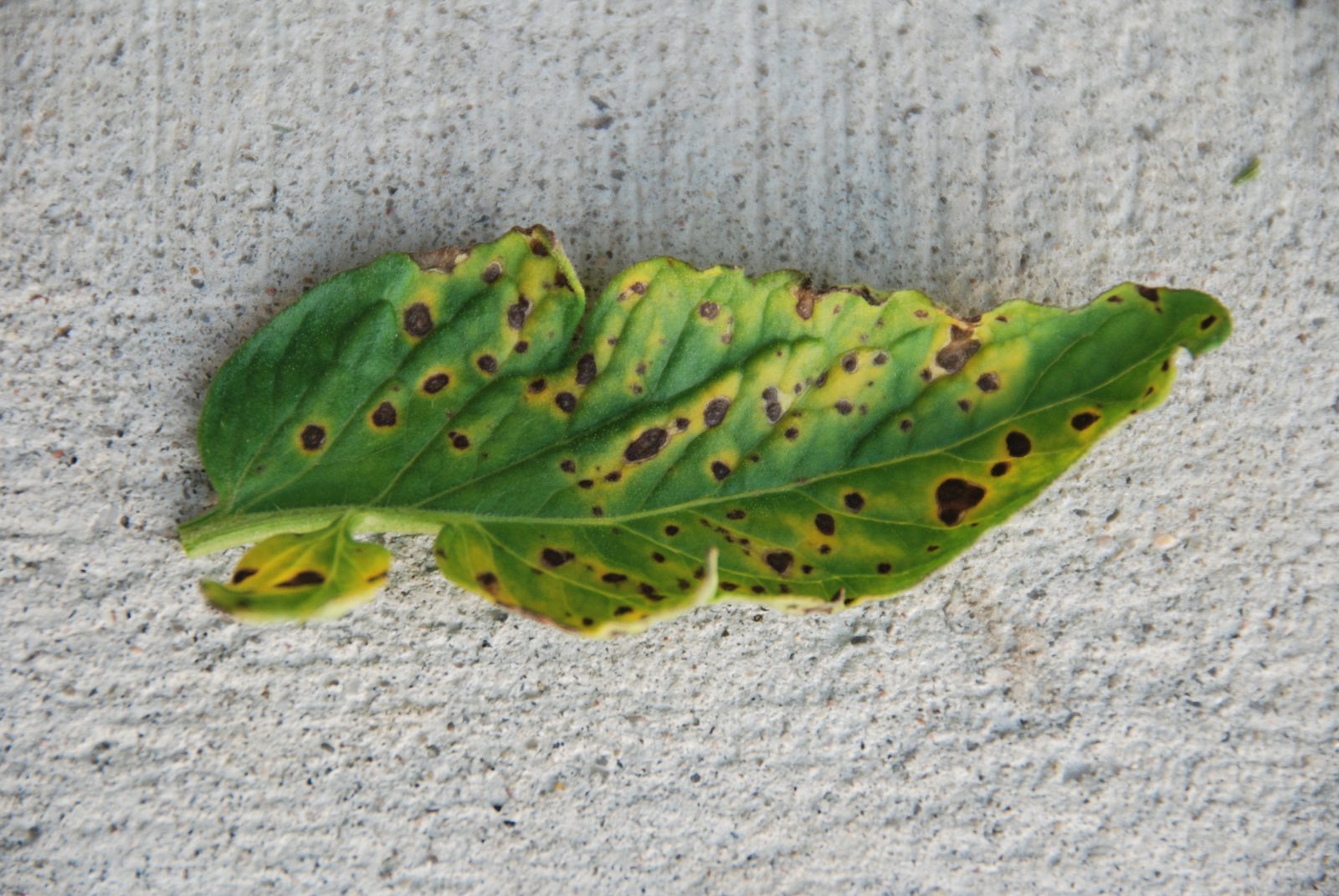
A gardener photographs one leaf
Brown spots showed up on the lower leaves of a tomato plant. The gardener takes one photo of one leaf, in daylight, close enough to see the spots.
What the system is doing
The photo goes to a small Python server. A gate checks it looks like a plant before anything else runs, using the model’s own confidence and how spread out its guesses are; photos of objects are turned away with a tip for a better shot. The photo is turned upright from its camera data and thrown away after the check.
Plant Tomato
- Early blight54%
- Septoria leaf spot27%
- Late blight11%
Not sure yet. Two of these look alike from a photo.
The model names the plant and three suspects
In about a fifth of a second the page shows the plant and the three likeliest diseases with their chances.
What the system is doing
A ConvNeXt V2 image model, trained on 19,260 lab and garden photos, scores all 29 conditions it knows. The scores are calibrated so 90% means right about 90% of the time. SPROUT only calls a result sure above 93%; on held-out photos, the ones it answers at that bar are right 95% of the time. At 54% it asks instead of answering.
A different leaf: tomato late blight
- Potato late blight78%
- Tomato late blight21%
Is this a potato or a tomato plant?
- Answer: Tomato Tomato late blight 21% to 90%
- One more yes 90% to 97%
Sometimes the plant comes first
Late blight looks almost the same on potato and tomato, so a photo alone can lean the wrong way. One tap on the plant fixes it.
What the system is doing
When the top suspects belong to different plants, the first question is which plant. Answering keeps that plant’s conditions and cuts every other plant’s to 2% of its weight. In this real run on a different leaf, tomato late blight went from 21% to 90% on one tap, and to 97% after one more yes.
Early blight
“The lesions develop a bulls-eye pattern of concentric rings.”
University of Maryland Extension, Early Blight of Tomatoes
Septoria leaf spot
“Circular lesions with grayish-white or tan centers and dark brown margins.”
UConn Integrated Pest Management, Tomato Septoria Leaf Spot
It looks up what tells the suspects apart
For each suspect, SPROUT pulls the guides’ own description of its symptoms.
What the system is doing
The search runs over 237 extension guides, filtered to tomato and to each disease still in the running. It combines keyword matching (BM25) with meaning-based matching, then a reranker reorders the top hits; the reranker is the part that measurably improved finding the right passage. This happens in a background thread the moment the photo is read.
Question 1 of up to 5
Do the brown leaf spots have dark rings inside them, like a bull’s-eye?
A yes points to early blight. From University of Maryland Extension.
It asks one question
Each question is about something you can see, answered with a tap. The answer shows at once because the questions were written while you were reading the result.
What the system is doing
An AI model writes a batch of six questions from those passages. Code then throws out any question that doesn’t cite a passage or that every suspect would answer the same way. From what’s left it picks the one expected to narrow the odds the most, so the first question is the most informative one, not the first one written.
- Early blight94%
- Septoria leaf spot2%
- Late blight2%
- Dark rings inside the spots Yes, 54% to 78%
- Many small spots with grey centres No, 78% to 85%
- A yellow ring around each spot Yes, 85% to 94%
Each answer moves the odds
A yes counts for the diseases the question’s passage describes, a no counts against them, and not sure changes nothing.
What the system is doing
Code multiplies the supported diseases by 3 for a yes, or by 0.35 for a no, then rescales everything to add up to 100%. Worked through: early blight 54 × 3 = 162 against 27 + 11 + 8 for the rest, so 162 ÷ 208 = 78%. It stops once one disease passes 93%, after five questions, or when no question can separate the suspects any more.
Keep plants mulched so soil doesn’t splash onto leaves, water at the base, and remove infected leaves during the season. A fungicide labelled for early blight can slow it; follow the label.
University of Maryland Extension, Early Blight of Tomatoes
SPROUT says “sure” only above 93%, so this is a likely answer.
The answer, with where it came from
Early blight, 94% sure, with care advice from the University of Maryland Extension guide.
What the system is doing
The advice was drafted in the background as soon as early blight became likely, so it appears with the answer. It is written only from the guide passages it cites. Below the 93% bar the answer reads “Likely” (70% or more) or “Best guess”, with a suggestion to try a closer photo.
The lowest leaves are turning yellow and dropping off.
That fits early blight: it usually starts on the lower leaves and works its way up. Pruning the lowest leaf branches once fruit sets helps.
University of Maryland Extension, Early Blight of Tomatoes
Early blight 94% to 97%
Can I still eat the tomatoes?
The guides I searched don’t cover that, so this is general advice, not from a guide: cut away any spotted parts and ask your local extension office if you’re unsure.
Then you can ask about your plant
The chat answers follow-up questions and remembers the conversation, so the gardener can describe what else they see.
What the system is doing
Each message is answered from the guide passages for the diagnosis, with numbered sources; anything the guides don’t cover is marked as general advice. When the gardener describes a symptom, the AI model points to their own words as evidence and the same code moves the odds: here, “lowest leaves turning yellow” fits early blight, 94% to 97%. A plain question never moves the odds.
That’s the whole check.
Photo, two questions, a diagnosis and a conversation.You’ve finished the walkthrough
See how each part is built, or try it on a leaf of your own.